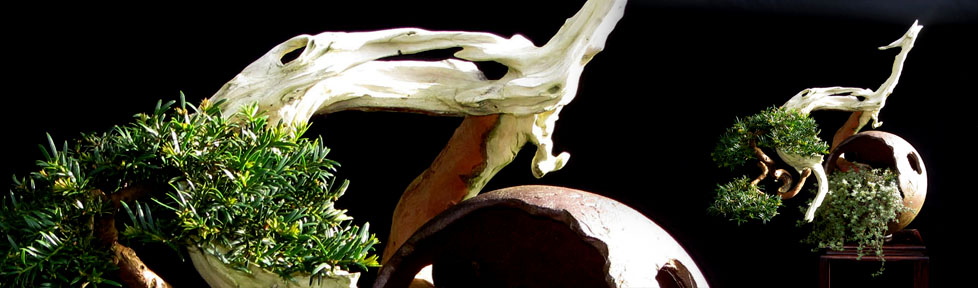
Juniperus Communis four years from collecting update

Juniperus Communis  03I collected this Juniperus Communis in 2008 from a granite cliff, the rocks were split and I was able to collect 99% of the root that was growing in the duff between the cracks. I learnt from Peter Thali you must only collect from granite, collecting from limestone will surely lead to failure and up to this point that has always been the case. I know of only one ‘large’ Juniperus Communis that have survived from the UK. I collected a few of these amazing specimens over 25 years ago… they all died! It could be that they were planted in the wrong mixture, not enough roots, too much/little water, disease, fungus, rust… the list is endless… Juniperus Communis should only be collected if you really know what you are doing.

The tree was planted in a soil mixture I was given from my friend Pavel Slovak. It is made up of collected mountain grit that is mostly limestone and tufa, mixed with pumice. The particles are 1mm to 3mm so really quite small, it’s almost sand in texture. This is NOT normally good in the wet climate of the UK… but it has made the tree thrive! So when it comes to re-potting into the position ready to style the tree I will reuse the soil.

Juniperus Communis 04Two years ago I cleared out a lot of the growth that was a long way from the ‘action’. The trunk spirals and twists in lots of directions and there was some great growth close to the trunk. This is what you can see in the photos after two further year’s growth.

I see a very compact tree with the emphasis on showing the twisty trunk. I will use the foliage for the final tree and NOT replace with Itoigawa as is the fashion. My reason is that I love to work with our native trees, Juniperus Communis would be a great addition to my private collection. This tree is not for sale

Juniperus Communis 02

Juniperus Communis 05

Juniperus Communis  01

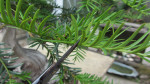
Cutting needles

How to create dense foliage mass on Yew Bonsai

It is important to know when to cut back and create good ramification. Planning the structure of your tree is critical in the early stages, even though the silhouette of the tree may look luscious and full, the structure and therefore the future quality of the tree will be compromised. The ‘pig tailing’ long branches and trimming the outline of the tree is a practice that must be stopped if our bonsai are to reach a high level.

Plucked needlesBack budding is created on ‘third’ year growth, in 2013 this means that branches that were grown in 2011, so in the early stages of creating the foliage ‘clouds’ you are working on three year cycles.

If you cut back too early the strength of the tree is weakened, the best time is when the new growth is approx 5 inches or approx 20cm long, trim back to between 12 and 20 needles. This growth will have thickened the branch and stimulated good root growth, and trimming in July ensures that there is enough time for the tree to make new buds both on the trimmed area and further back down the branch.

To encourage new back budding pluck the needles on the third year’s growth, this will throw out masses of strong new growth before Autumn ready for the following year.

white pine flower buds 2

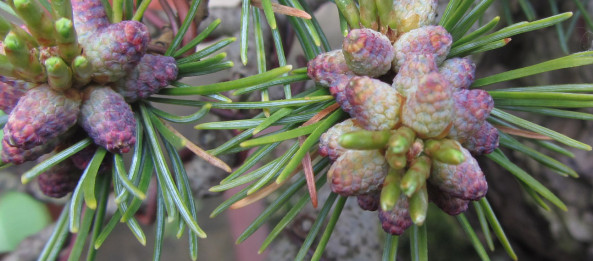
Removing the flower buds on a White Pine


When I returned from the Czech Republic I saw that my Chuhin white pine had a huge amount of flowers, it was obvious the tree was healthy but there were so many that it would suffer if they were not removed, I mostly work with native European trees and my experience with imports is limited.

This from my good friend Mark Cooper on EBF:  “One has to be very careful and gentle when removing the juvenile flowers buds though so as not to lose any new candle buds.

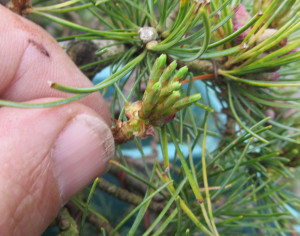
Pinching out the buds one at a time

Pinching out the buds one at a time

However, if the new candle emerges on such a long “leg” due to an abundance of large flower buds beneath it (rendering it of no use), what we do is let the candle fully open and ripen and then cut that shoot (and most of the leg) off nearly back to last year’s growth, and hopefully some back budding may occur. This assumes that the tree is healthy, well fed and vigorous. Usually only one flush of growth happens in one year here… it’s primarily about directing/ controlling the tree’s energy to where you want it, and then about shape/ pad profile.

Taking care not to damage new needles

So in weak/ inner areas prune lightly (say 25% reduction) or not at all, and harder in stronger areas/ apex. One also has to keep in mind pad shape whilst candle pruning in refined trees too.”

I could not have put it better.

I estimate that I removed over 1500 buds from this little tree. The tree is strong and well fed and it will be kept in the greenhouse if the weather turns inclement. I will be removing the candles in a few weeks time to maintain the pad profile, and if we have a better summer than the last three hopefully new needle buds will show themselves.

the buds that have been removed

The buds that have been removed

By Tony Tickle • Posted in Pine, Technique, willowbog • Tagged needles, technique, White Pine