Final preparations for The Noelanders Trophy, cleaning, drying and refining small elements

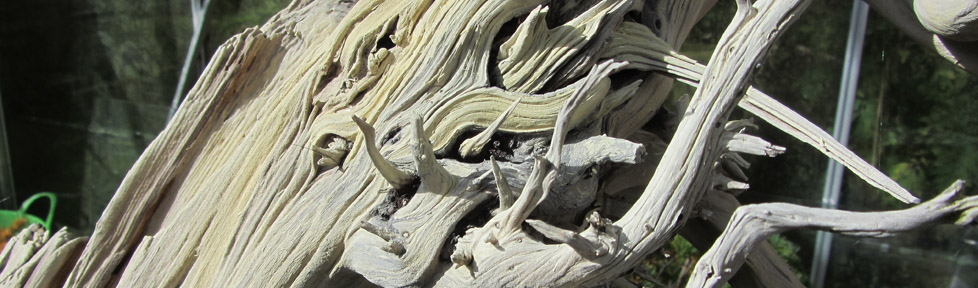
Final preparations for The Noelanders Trophy, cleaning, drying and refining small elements

The stone and the tree were collected together; I had no option as the tree grew through the stone. I carried the tree for just under a mile down the mountain to my vehicle… it is very heavy and I collected no more that day as I was truly knackered. I have done some work on the right side of the stone as I wanted to expose some more of the trunk line, this has now weathered and is indistinguishable from the rest of the stone. The combination were collected in 2009 and the tree has thrived over the last few years, even though the tree is very slow growing the canopy is developing well and should become a pleasing bonsai in time, a dwarf rhododendron is planted at the front to break up the ‘wall’ of stone. .

How the tree looked when first collected

with a little temple just for fun!
Earlier this week I took a friend from Italy Andrea Meriggioli to some of my special places where the most amazing trees grow. He was surprised that these incredible trees were in the UK. Especially the BIG deadwood Yew.


This is a Chuhin Yamadori yew that I collected 10 years ago, I have slowly worked the tree down from a large double trunk to this little tree. Prior to making the photos I was undecided as to which ‘front’ I wanted for the tree. I think know, but what do you think? Please vote on your preferred front and comment as to why you have chosen. Thanks for taking part. BTW the pot is NOT the final pot for exhibition.


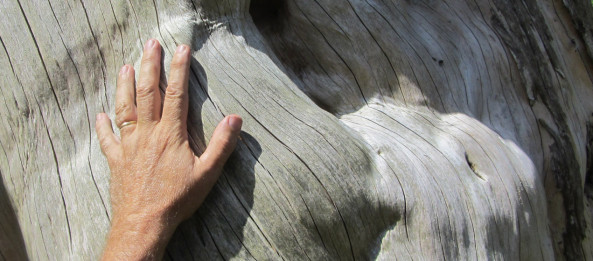
Earlier this month I made a pilgrimage to Borrowdale in the Lake District, a beautiful area and home to some of the most amazing trees in the UK. I went in search of some amazing ancient Yew trees, described by the Poet Wordsworth as ‘the Fraternal Four’ – though there are now only three.

“But worthier still of note
Are those fraternal Four of Borrowdale,
Joined in one solemn and capacious grove;
Huge trunks! -and each particular trunk a growth
Of intertwisted fibres serpentine
Up-coiling, and inveterately convolved, -
Nor uninformed with Fantasy, and looks
That threaten the profane;”
It is hard to believe that these three trees are not signposted, despite one of the trees being named by the Tree Council and selected as one of the 50 Great British Trees recognised to celebrate the Queen’s Golden Jubilee in 2002. Difficult to find the only ‘threat’ to these trees being the 140 inches of rainfall and the harsh growing conditions. I took with me a superb account from Toby Hindson (you can download it here) who in 2012 recorded in detail the condition of the remaining trees.
 We arrived in the Borrowdale valley armed with our directions yet still found them difficult to locate, I called to a group of walkers across a field of grazing sheep “are you searching for the Yews?” not realising that they probably thought “Ewes”… Carolyn was in hysterics.
After consulting the OS map we identified the location and set off alongside a dry river bed, the hillside was deep with ferns and dry as tinder. The route up the Trees is over granite Talus and they are growing on and between the large stones, the largest tree growing over a large rounded boulder.
 The three trees grow close to each other and create a strange mystical atmosphere under the canopy. I had an amazing feeling of euphoria during the whole time I was among the ancients, my friends simply could not believe that they were stood in visible history, they too were entranced. In 2005 the crown of the oldest tree literally ‘snapped’ off. It lies alongside the bulk of the tree as a white skeleton. The deadwood on the main tree is something to behold, bleached white by the sun it’s a great model for bonsai. All the trees are hollow the oldest is so large that 6 persons can easily stand inside, the other two trees display copious deadwood that is not bleached white but rotting brown. All have low hanging branches that are regenerating.
In the book “The Sacred Yew” Alan Meredith considered these trees to be Neolithic, the National Trust approximately 2500 I am with Meredith, these trees are ancient. From my own experience and visits to many old and ancient Yews in the UK including the Fortigall Yew at Glen Lyon, these trees may well be over 5000 years old.
Next time you venture into the Lake District take the time to visit The ancients, you will not be disappointed.

Three years is a long time to find out if your collected tree has made enough root in the right place to enable you to pot the tree into a training pot. I had reached the stage where the BIG yew was ready, would there be enough root, would it fit into the BIG pot I had prepared, could I make this big heavy tree stable and secure?
My good friend David Barlow was there to help me. David is a superb engineer and this tree would require some clever sub soil engineering to make it stable.
 The tree was suspended between two plant pots so that I could work to remove the plastic pots easily. David held the tree and I set to work. I was very pleased with the amount of new root the tree had made.
When the tree was collected very little root was on the tree, careful maintenance and a strict regime of misting, feeding, placement and feeding had brought the tree on well… I was happy to start the work.
The Yew had been planted in a VERY open soil mix of Acadama, Grit and pumice and a small amount of orchid bark. This ensured good drainage and an easy media for root growth.
Once the old plastic pots had been cut away the roots could be inspected closely, I decided to cut away eight inches of root so that the tree would sit well in the pot. I was aware of the old deep root from the time that the tree was collected (photograph EVERYTHING) had I not removed this the tree would have not have looked stable in the pot.
I would have liked to have had the deadwood at the base of the tree overhanging the pot, BUT when the tree was positioned in the pot it simply did not work, it had to be removed!

Two hardwood blocks were employed to stabilize the tree, they were fixed in place with copper wire. The base of the tree was drilled and 4mm Copper used to tie in the tree through the holes in the base of the pot.
I used large size pure Acadama in the potting as this had proved very successful on previous potting of large Yew in my garden. Once the soil was filled to the rim of the pot the drama created by the base of the tree could be enjoyed. This was important as the visual weight of tree required a strong base to sustain the appearance of a massive tree.
The first styling of the tree with the basic branch structure put in place was in November, this potting was two months ago and the tree has responded well. I guess it will be AT LEAST ten years before this tree is ready for showing… BUT it will be worth it.


In the dark depths of my memory I remember a phrase spoken by another artist during a lecture/demo… “Create the smallest Bonsai possible with the material you have” … and lets face it BONSAI are supposed to be small trees. Despite the plethora of large trees being shown in major exhibitions I have noticed an upsurge in ‘small’ bonsai… Note the recent major Shohin exhibition here in the UK and the growth of the British Shohin Association over the last few years. Certainly many artists of my generation (and older) suffer from ‘Bad backs’ due to carrying over large bonsai.
Many large bonsai do possess drama and ‘presence’ but so do small trees… AND I believe that small trees are more challenging, far more attention to detail and a delicate touch is required.
I have just styled this ‘Kifu’ Taxus. When the tree was collected from the cliff face it was over 1.5 metres in height and a double trunk. The original idea was a Chuhin size but the fascinating area around the nebari and a twisting live vein leading to a strong branch enabled this tree to become a Kifu size bonsai. It is planted in a lovey circular pot by Milan Klika.

the Kifu taxus styled today

Not quite as collected, the top of the tree has been reduced

This was how the tree was originally styled but it simply did not look OK
Whilst on my European Tour this year I stayed for a few days with Enrico Savini and the
Progetto Futuro Bonsai School in Bologna, Italy. It was great fun working with the guys in the sunshine and doing some preparatory work on the yamadori trees that was selling at the EBA event in Ljubljana here is a Prunus Spinosa that I worked. The trunk split into two about 20cm from the base, one trunk having wonderful movement and the other none whatsoever! After removing the offending trunk I set about creating a deadwood area as natural appearing as possible. Prunus Spinosa are becoming very popular with Bonsai artists throughout Europe as they are easy to work, display beautiful small white flowers in Spring and create good branch ramification quickly.
The tree is now in the ownership of Hungarian artist Sándor Papp who I am confident will create an amazing literati Bonsai from this tree.

Photo courtesy of Sándor Papp

There was always going to be a time when I had to cut the BIG yew into two as the roots were contained in two separate pots. Each pot fed its own foliage, enabling ‘splitting’ the tree.
Using an Industrial size reciprocating saw and my friend Terry Foster we cut the tree in two. It took less than 20 minutes… something I waited three years to do and it was completed in such a short time.
This wonderful tree has such amazing deadwood, the challenge I now faced was how to blend the man made cut with the natural deadwood? My work had to be ‘natural’ looking, not ‘carved and sculptured but in sympathy with the tree.
I did not want to ‘overwork’ the cut. I created indents, accentuated holes and smoothed out undulations deliberately leaving a ‘rough’ finish. I used chisels, wedges and split the tree along the grain of the tree. Where the wood became ‘confused’ I ripped and twisted the grain.
After three hours working without Makita’s or Dremmels I was satisfied that I was ready for the next stage. The tree would be ‘naturalised’ with sand blasting. I first sandblasted a tree 20 years ago using a blasting cabinet, that tree was only 75cm tall. This tree is over one metre, far too large to fit in a cabinet!
Close to my nursery is a commercial blasting company, and after covering the pot, foliage and live vein I ventured to them. The work was completed, a weather ‘ancient’ look had been created in less than an hour! The results are great.
My bonsai journey and art
where observation and imagination meet nature in poetry
Adventures in Clay
This isn't Mr. Palls blog, but I sure am an amateur...
Welcome To My Bonsai World!
Bonsai Adventures
Welsh Bonsai Trees- Inspired by local naturalised trees
Updates from Willowbog Farm
A Bonsai Apprentice Life + Times
an English girl tasting her way around the world
Bonsai, Portugal, demo, trees, yamadori, studio, art, nature...
藤川国際盆栽学校 Ikeda City - Osaka, Japan
Bonsai Artist Michael Hagedorn
La Via di Kitora
Wildlife on Willowbog Farm
My on-line Bonsai Diary
My Life in Bonsai and Ancient dwarf trees
An American Bonsai Artist and Instructor
Teaching you how to create beautiful Bonsai
